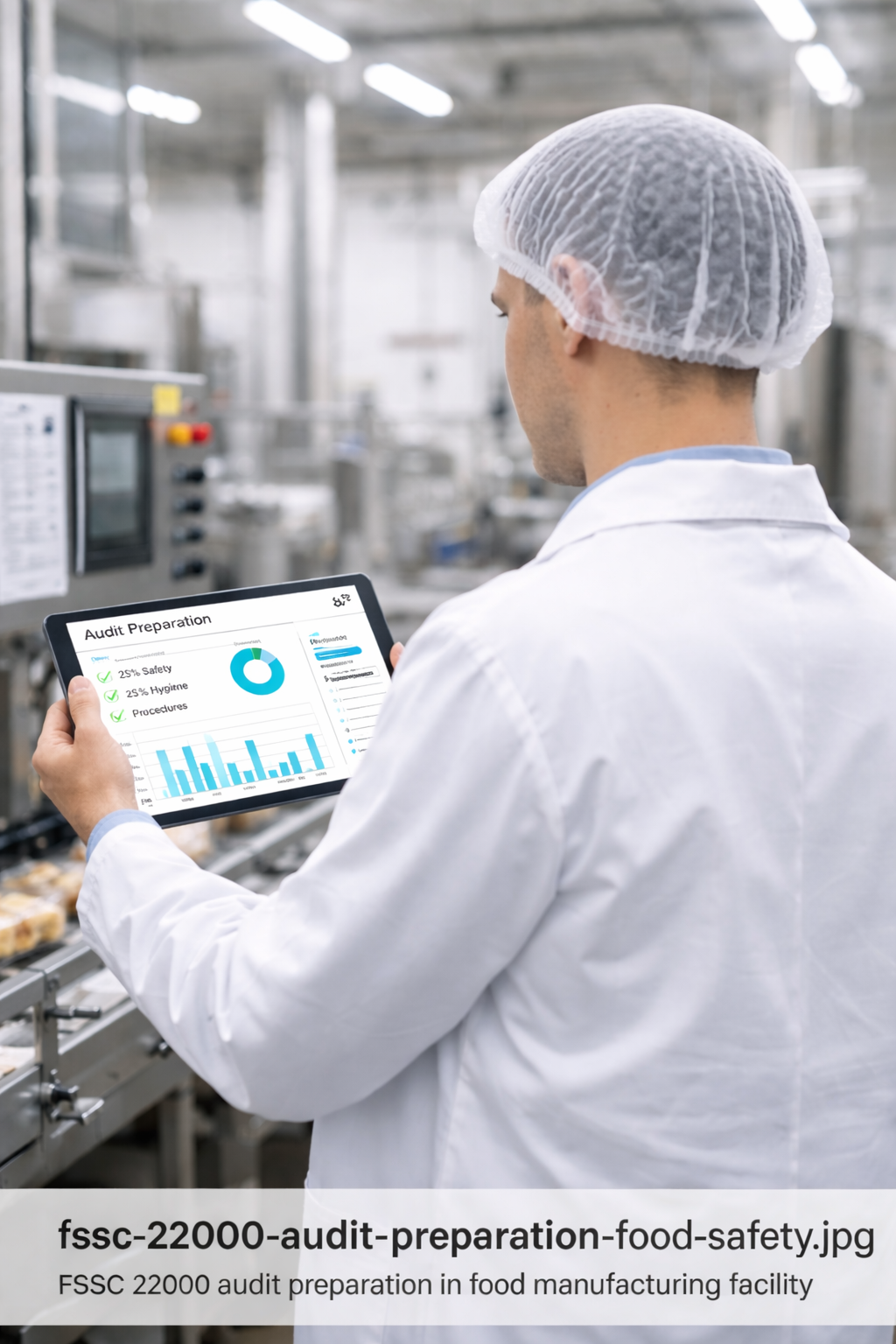
The Ultimate Guide to Preparing for an FSSC 22000 Audit
How to Prepare for an FSSC 22000 Certification Audit: Essential Steps to Minimize Non-Conformities and Stress
Preparing for an FSSC 22000 certification audit can feel overwhelming. However, with the right approach, it becomes a structured and manageable process.
An FSSC 22000 audit is not just about documentation — it evaluates how effectively your food safety management system works in real-life operations.
The key to success is simple: demonstrate that your system is implemented, understood, and consistently followed.
Understand What the Auditor Will Evaluate
Before preparing, you must clearly understand the three pillars of FSSC 22000:
ISO 22000 (Food Safety Management System)
Prerequisite Programs (PRPs – hygiene, sanitation, environment)
FSSC Additional Requirements (food fraud, food defense, allergens, etc.)
All three must be fully implemented and working together, not just documented.
Step 1: Verify System Compliance
Start with a full review of your system against the latest FSSC 22000 requirements.
Conduct a clause-by-clause gap analysis
Ensure procedures match actual operations
Confirm regulatory and customer requirements are covered
This step ensures your system is aligned before the auditor arrives.
Step 2: Ensure Real Implementation on the Floor
One of the most common causes of non-conformities is the gap between documentation and reality.
Walk your facility as if you were the auditor:
Observe sanitation practices
Verify allergen controls
Check pest control and maintenance programs
Review employee practices
Auditors expect to see that procedures are actively followed, not just written.
Step 3: Strengthen Your Documentation and Records
Your records are your proof of compliance.
Focus on:
Complete and signed logs
Monitoring and verification records
Corrective actions with root cause analysis
Traceability (one step forward, one step back)
You must be able to demonstrate traceability quickly and accurately during the audit.
Step 4: Conduct Internal Audits and Management Review
Internal audits are not optional — they are critical.
They help you:
Identify gaps before the certification audit
Validate system effectiveness
Ensure continuous improvement
Management review must also be:
Structured
Data-driven
Documented with clear decisions and actions
Auditors expect to see active leadership involvement and decision-making.
Step 5: Train and Prepare Your Team
Your employees play a major role in audit success.
Auditors will interview staff to confirm that:
They understand their responsibilities
They know why procedures matter
They can explain what they do
Best practices:
Conduct mock interviews
Train employees on “why”, not just “how”
Encourage honest answers
A confident team significantly reduces audit stress.
Step 6: Perform a Mock Audit (Critical Step)
A mock audit is one of the most effective ways to prepare.
Simulate the real audit by:
Walking the site
Reviewing records
Interviewing employees
This allows you to:
Identify hidden gaps
Correct issues before the audit
Reduce surprises
Even small issues can lead to non-conformities if not addressed.
Step 7: Close Gaps and Verify Effectiveness
After your mock audit:
Assign corrective actions
Perform root cause analysis
Verify effectiveness of corrections
Auditors want to see not just corrections, but evidence that problems are solved and controlled.
How Software Can Help You Stay Audit-Ready at All Times
Managing an FSSC 22000 system manually (Excel, paper, scattered files) quickly becomes complex and error-prone.
A dedicated Food Safety Management Software allows you to:
Centralize all documentation in one place
Automate records, logs, and approvals
Track corrective actions in real time
Ensure version control of procedures
Access traceability data instantly
Schedule internal audits and reminders
Maintain full visibility of compliance status
Instead of preparing only before an audit, you move toward a state of continuous audit readiness.
This significantly reduces stress, saves time, and minimizes the risk of non-conformities.
Common Mistakes to Avoid
Many companies fail audits due to avoidable issues:
Procedures not followed on the floor
Incomplete or inconsistent records
Lack of employee awareness
Weak corrective action processes
Poor traceability
Avoiding these pitfalls can dramatically improve your audit outcome.
Final Preparation Tips
In the final weeks before your audit:
Clean and organize the facility
Ensure documents are easy to access
Assign audit responsibilities to key personnel
Prepare an audit plan and schedule
Remember: the audit is not about perfection — it’s about control, consistency, and transparency.
Conclusion
Preparing for an FSSC 22000 audit doesn’t have to be stressful.
When your system is:
Well implemented
Properly documented
Understood by your team
You are already audit-ready.
The goal is not just to pass — but to demonstrate a strong, functioning food safety culture.
Be Audit-Ready, Every Day
With the right tools, audit preparation becomes part of your daily operations — not a last-minute effort.
Certalim (Food Quality & Safety Management Software) helps food businesses simplify compliance, centralize their systems, and stay ready for audits at all times.
From documentation control to real-time tracking and audit preparation, Certalim is designed to reduce workload, improve visibility, and support your team every step of the way.
👉 Stay compliant. Stay efficient. Stay audit-ready. www.certalim.ca